
Lessons in Residential Design
From Finehomebuilding.com | October/November 2016 edition
Baths with freestanding tubs
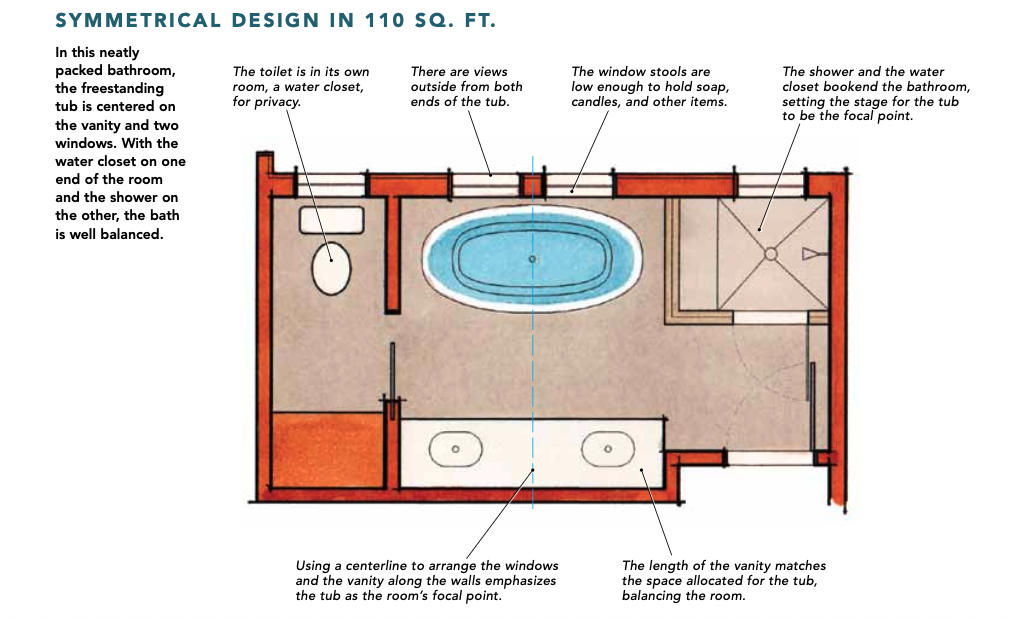
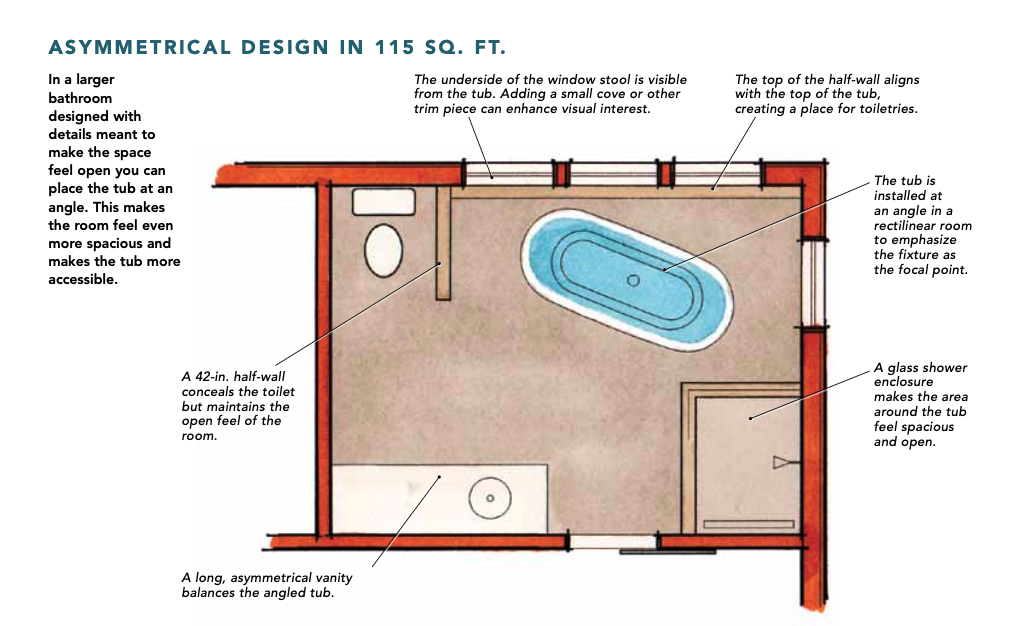
Freestanding bathtubs are trending, and with good reason. Whether modern or traditional, they add elegance to a bathroom like nothing else. Though often reserved for bigger baths, freestanding tubs can work in smaller spaces with the right layout, design, and tub choice. (Still, while freestanding tubs are perfectly suited to master baths, they’re not right for all situations. They may be problematic for bathing small children, for example.) A freestanding tub is typically the focal point of the bathroom, so it makes sense to determine its location first and then to lay out the other elements—the shower, vanity, and toilet—around the tub, using them in ways that support the design.
There are several things to keep in mind when including a freestanding tub in a bath, starting with the size of the tub. Tub length is best determined by having the bather try out different tubs. A 6-ft. tub might sound more desirable than a 5-ft. one, but too big can be uncomfortable for smaller people.
Once you’re sure that a freestanding tub is right for you and you have a particular product in mind, you can focus on room layout. Keeping the toilet as far away from the tub as possible—ideally in its own room—makes the tub more inviting. The relationship between the tub and windows is important in terms of seeing and being seen—or not. It is also wise to think about what you see from the tub; the room looks very different from a lower vantage point.Although storage is often overlooked, a place within arm’s reach of the tub for soap, shampoo, towels, and other commonly used bath items makes a big difference.
Finally, it’s a good idea to make sure that the floor joists under the tub are up to the task of supporting the tub and 500 lb. of water.
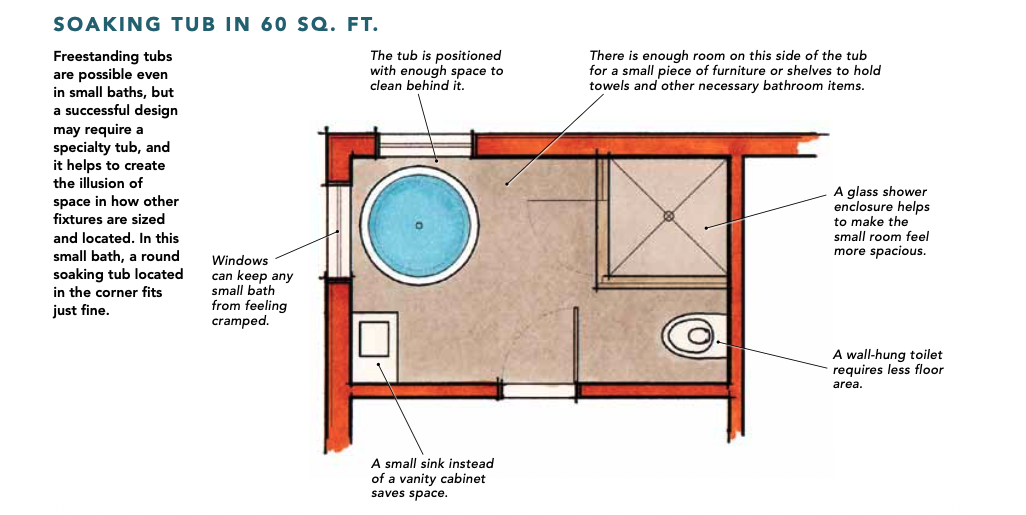
When it comes to room size and dimensions, about 110 sq. ft. is optimal for a 60-in.-long to 72-in.-long tub and a separate shower. A 9-ft. by 12-ft. or 8-ft. by 14-ft. room, for example, would work just fine. A smaller bathroom, even one that’s 60 sq. ft., will still work if you use a slipper tub or a small Asian-style soaking tub. Soaking tubs are usually round or square, and they are deep enough that you can be almost entirely submerged when seated. A 40-sq.-ft. Bathroom (commonly 8 ft. by 5 ft.) is usually best served by a soaking tub and small shower, or you can forgo the separate shower and use a small tub only.
Freestanding tubs are available in myriad materials, from enameled cast iron to stone, composites, wood, and copper. While cast iron is both durable and traditional, it’s very heavy and tends to be costly. Acrylic and fiberglass are popular for their light weight and lower cost. Metal tubs maintain water temperature for longer, but they require more maintenance. Some tubs are available with wood plinths or pedestals, which can be scribed to fit a tub to uneven flooring.
Once you’ve chosen the tub, you can choose a plumbing fixture to pair with it. Style depends on your taste, but it is important to consider the fixture’s installation details. Tub fillers can be mounted on the floor, the tub deck, or the wall. Floor-mounted fillers are versatile and can be installed anywhere around the tub, which makes it easy to locate them conveniently. It is important that fixtures be easily reachable from both outside and inside the tub. Fittings in a location that is easy to reach while standing next to the tub might constitute a nuisance when getting into the tub or when accessing the taps or hand-held showerhead while bathing. Some tubs come with holes in the deck to accommodate the fittings. Wall-mounted tub fillers can be used with freestanding tubs as well, though it is important to make sure that the spout is long enough to get the water into the tub. Freestanding tubs can make a bath beautiful, but there’s a lot to consider to make them work.